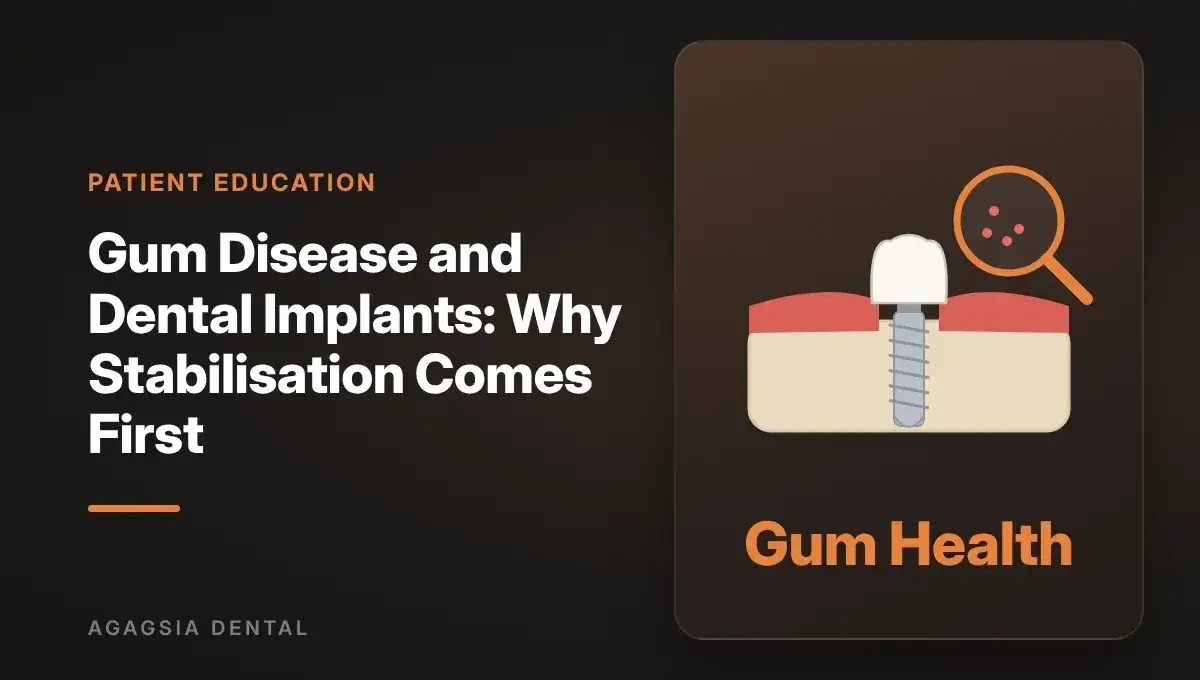
Implants do not cure gum disease
Removing teeth and placing implants does not remove the patient’s susceptibility to plaque-related inflammation. Active periodontal disease should be assessed and stabilised before elective implant treatment.
Risk factors continue after treatment
Smoking, diabetes control, previous periodontal disease, poor plaque control and irregular maintenance can increase the risk of inflammation around implants. Full-arch bridges can be especially demanding to clean.
What preparation may involve
Preparation can include professional cleaning, periodontal treatment, home-care coaching and review of bleeding and pocketing. The treatment plan should be reconsidered if disease remains uncontrolled.
Long-term monitoring
Implant reviews may include tissue assessment, plaque and bleeding scores, bite, bridge stability and selected radiographs. Early inflammation can be easier to manage than advanced bone loss.
Related reading
This page is general information, not a diagnosis. Treatment suitability, timing and alternatives can only be confirmed after clinical examination and imaging.