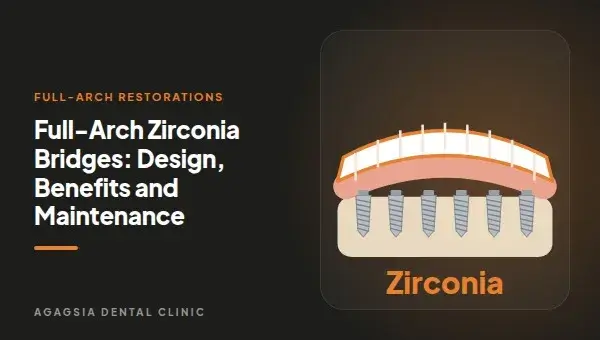
Full-arch zirconia bridges are used in selected restorative plans to replace an entire row of teeth with a fixed prosthesis. Zirconia can provide strength, colour stability and a ceramic surface, but a successful bridge is not created by material choice alone. Implant distribution, framework dimensions, jaw relationship and hygiene access are essential.
When is zirconia considered?
Zirconia may be selected for a definitive implant-supported bridge after healing, or for specific tooth-supported designs. The clinician and laboratory consider space, lip support, smile line, opposing teeth, implant positions, screw access and expected forces. Alternative materials may offer different weight, repair or cushioning characteristics.
Why a provisional phase matters
A provisional bridge allows appearance, speech, lip support, bite and cleaning access to be assessed while tissues heal. Information from this phase helps shape the definitive restoration. Moving directly to a final ceramic bridge without validating these factors can make later changes more difficult.
Digital records and fabrication
Accurate implant-level records, jaw relation, facial references and a verified model or digital workflow are needed. The bridge is designed to fit passively and provide appropriate contacts. A clinical try-in or verification steps may be used before final delivery. The team checks screw torque or cementation protocol according to the design.
Benefits and limitations
Zirconia can provide a smooth, aesthetic and wear-resistant restoration. Limitations may include weight, difficult repair, wear against opposing materials, chipping in layered designs and the need for adequate restorative space. Clicking sounds and adaptation can occur. The patient should understand the exact material and construction.
Cleaning, reviews and complications
Daily cleaning beneath the bridge is necessary using aids selected for its contours. Professional visits should review plaque, tissue health, bite, screws and material. Mechanical complications or inflammation around implants can develop even when the bridge looks intact. A night guard may be advised for bruxism.
Consultation Call to Action
Ask for a full-arch restorative assessment that covers provisional and definitive bridge materials, hygiene access and long-term servicing.