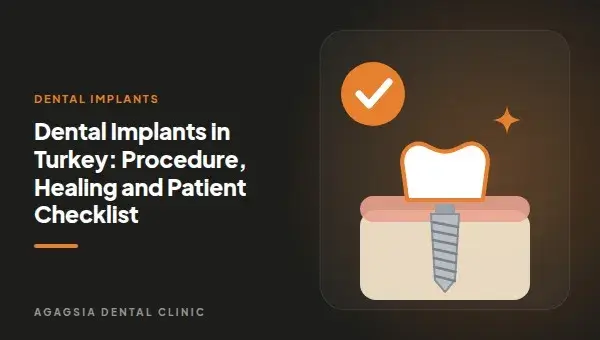
A dental implant is placed in the jaw to act as an artificial root for a missing tooth. It may support one crown, a bridge or a larger prosthesis. Implant treatment is a surgical and restorative process rather than a single appointment, so accurate diagnosis and realistic scheduling matter—especially for patients travelling from abroad.
Who may be considered for an implant?
An assessment considers the location of the missing tooth, available bone, gum health, bite, oral hygiene, smoking, medications and general health. Active infection or uncontrolled gum disease normally needs attention first. Some patients require bone augmentation or an alternative restoration. Age alone does not determine suitability, but growth should be complete.
What happens during implant planning?
The dentist reviews medical and dental history, examines the mouth and uses appropriate imaging. A panoramic image or CBCT may be recommended when three-dimensional information is needed. The plan should identify the implant position, proposed restoration, number of visits, alternatives, material choices, likely additional procedures and aftercare.
Placement, healing and restoration
The implant is placed under local anaesthesia in a planned position. Depending on stability and the case, a temporary tooth may or may not be possible. Bone then heals around the implant over a period determined by the site and individual response. After healing, an abutment and definitive crown, bridge or prosthesis are fitted and the bite is checked.
How many trips might an international patient need?
Many implant cases are staged: one visit for placement and a later visit for the definitive restoration after healing. Immediate or early loading is only appropriate in selected cases. Bone grafting, extractions or complex full-arch treatment can change the sequence. The clinical team should confirm the schedule before flights are arranged.
Risks and long-term care
Surgery can involve pain, swelling, bruising, infection, bleeding or delayed healing. Other recognised risks include injury to nearby structures, implant failure and later inflammation around the implant. Daily plaque control, interdental cleaning, professional maintenance and review of the bite are essential. Smoking can delay healing and increase risk.
Consultation Call to Action
Request a preliminary implant assessment by sharing photographs, medical information and any recent X-rays. Final recommendations follow examination and imaging at the clinic.